

Plank flooring
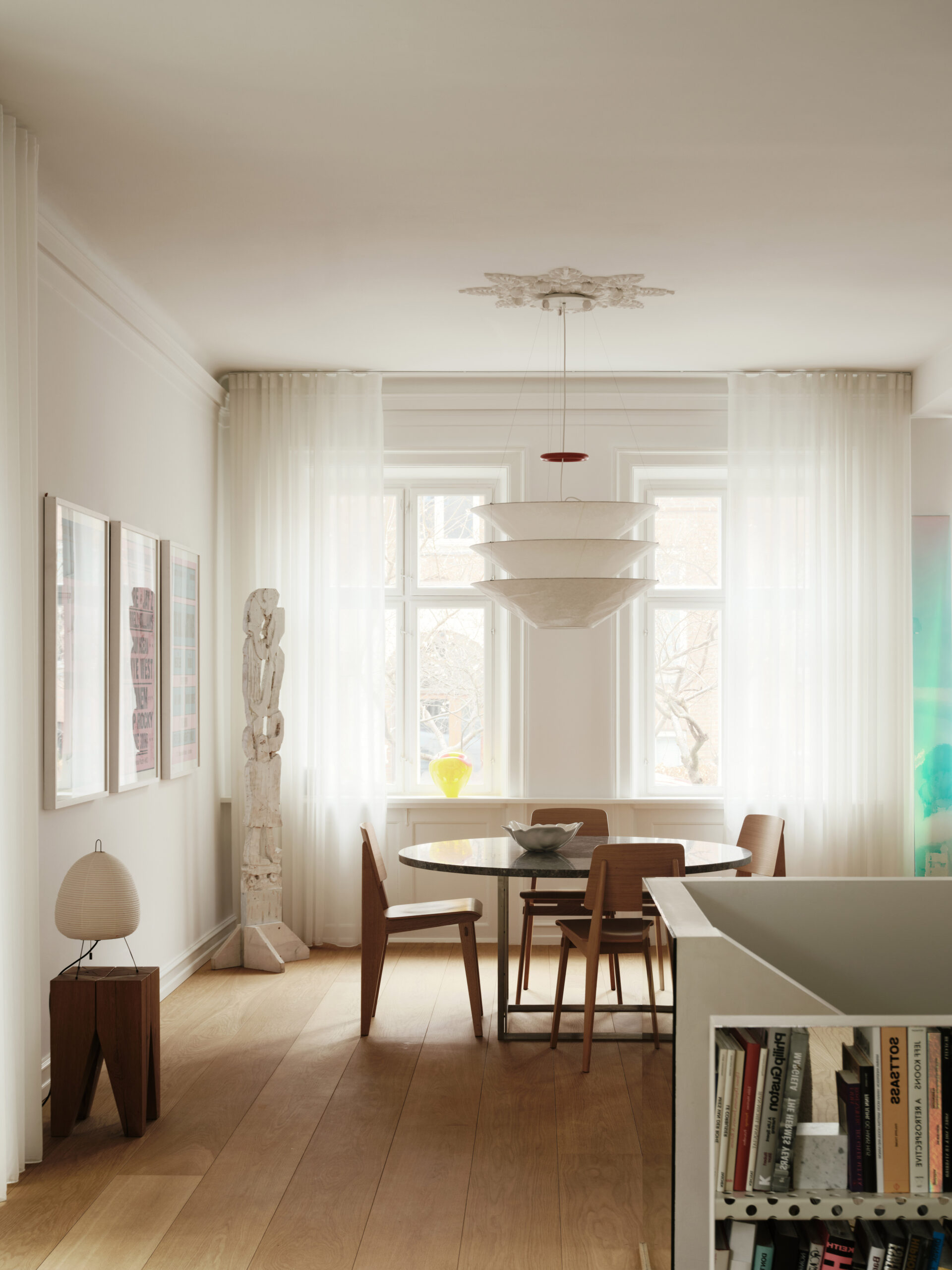
Oak plank flooring, 102 Sandhammaren
What is plank flooring?
A plank floor is recognised by its long, generous planks. It is not the construction that defines the floor, but the format – and the sense of calm and space that arises when a room rests on few joints and wide surfaces of wood.
Where many mass-produced floors are laid in short, fixed lengths, a plank floor is allowed to run through the room. The grain of the wood takes centre stage, and the floor becomes part of the architecture rather than a surface laid on top of it. In this guide, we go through what determines the expression of a plank floor: format, construction, wood species, installation and care.
Width and length – the proportions of the floor
The width sets the rhythm of the floor. Wide planks bring out the structure of the wood and give a calm, generous impression, while narrower planks create a denser rhythm. Length is at least as important – often more so. Long planks reduce the number of joints and let the floor run uninterrupted through the room. That is why we often recommend prioritising length over width.
Our plank floors are supplied either in random lengths, where the planks vary naturally and the joints are spread unevenly across the surface, or in fixed lengths for a more architectural expression – for example, planks that run from wall to wall. The proportions of the room, the light and the floor plan determine what works best.

Plank flooring in random lengths


Oak plank flooring with butterfly joints
Solid or engineered?
A plank floor can be solid or engineered. A solid floor consists of the same piece of wood throughout its thickness. An engineered floor consists of three cross-glued layers with a top layer of solid wood. The construction reduces the natural movement of the wood and gives a more stable floor – with no visible difference on the surface. For underfloor heating and larger dimensions, we recommend engineered. Read more in our guide to engineered plank flooring.
Anchored to the house
Our plank floors are glued or screwed to the subfloor rather than installed as floating floors. This gives a firm, quiet feel underfoot and makes it possible to let the floor run uninterrupted between rooms. For wider planks, we recommend screwing from above, with the screw holes plugged – a detail that becomes part of the floor’s expression. Read more in Plank flooring anchored in the architecture.
Choosing a wood species
Oak is the timeless choice – hard-wearing, versatile and with a warm, natural structure that ages beautifully.
Ash gives a lighter expression with a lively grain, and is a good choice if you want a truly light floor.
Douglas fir is a softer species with a calm, linear grain and warm tones, available in impressive widths and lengths.
Pine brings a warm, natural character rooted in Nordic building traditions.
Which species suits best depends on how the room is used, its architecture and the expression you want to create. The grading – from the calm Premium/Natur to the lively Classic – affects the expression as much as the wood species.

Ash plank flooring, 210 mm wide


Douglas fir plank flooring, 300 mm wide
Finish and care
Our plank floors can be supplied pre-finished with hardwax oil or lacquer, or unfinished. Hardwax oil gives a soft, natural surface that can be maintained and often repaired locally. Lacquer gives a durable surface that is easy to keep clean day to day.
Care is simpler than many think: dry cleaning first and foremost, and damp cleaning with a product suited to the floor’s finish when needed. Maintain the surface when it starts to show wear – before it is worn through. A plank floor can also be sanded and refinished, which means it can last for generations.
Laying direction
Plank floors are often laid along the length of the room or towards the main source of light. But there is no direction that is right for every room – architecture, light and floor plan should decide together.
We help you find the right format, wood species and finish for your project. Book a meeting, order colour samples or explore our plank flooring.
FAQ
How much does a plank floor cost?
The price depends mainly on wood species, dimensions, grading, construction and finish. The wider and longer the planks, the higher the price usually is – especially combined with a calm grading, as this places greater demands on the raw material.
Can you have plank flooring with underfloor heating?
Yes. With underfloor heating we recommend an engineered plank floor, and the surface temperature must never exceed 27 °C.
Can you have plank flooring in a bathroom?
No. Our floors are intended for indoor use and must not be installed in bathrooms, below ground level or in other rooms with a risk of increased moisture.
How many times can a plank floor be sanded?
It depends on the construction and the thickness of the top layer. A well-made plank floor can normally be sanded several times during its lifetime.
