

Plank flooring anchored in the architecture
A floor supports a room without demanding attention. This is the paradox at the heart of all good architecture: what holds everything together is rarely the first thing you notice.
At Chevron, we see the floor as part of the building’s structure, not as a surface added afterwards. That is why our plank floors are glued or screwed to the subfloor, and why they are supplied in random lengths rather than a handful of repeated sizes. Two decisions, made long before a single plank is laid, that ultimately determine how the room will feel.
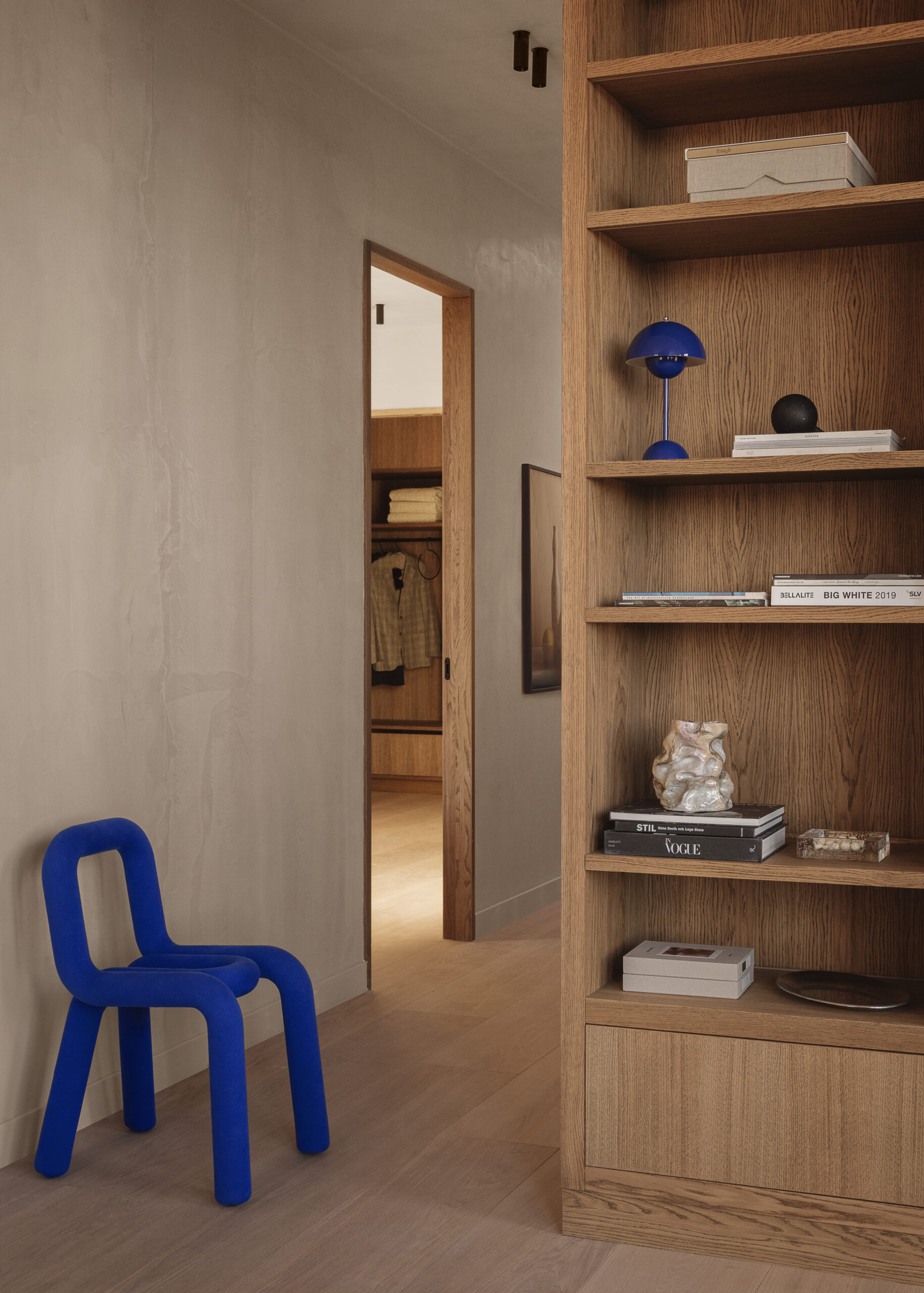
Plank flooring connects the rooms, enabling threshold-free solutions and seamless transitions.
Anchored to the building, not laid on top of it.
A floating floor rests loosely on its substrate. The planks click together, one against the next, but fundamentally it remains a layer—something that lies within the building rather than belongs to it. You can feel it underfoot: a certain echo, a slight movement, a reminder that the floor is, in fact, loose.
Our plank floors are installed differently. Each board is glued or screwed directly to the substrate, creating rigidity in the truest sense: no hollow resonance, no movement, only the dense, solid quiet that comes when a material is firmly anchored in place. Footsteps take on a lower tone. The floor ceases to be a surface and instead becomes part of the building’s structure.
This fixed installation also creates an architectural possibility: allowing the floor to run uninterrupted from room to room, without thresholds to divide the spaces. Where a floating floor often needs to be broken up to accommodate its own movement, a fixed floor can continue seamlessly from where the previous room ends. The line remains unbroken. The rooms speak to one another through a single, continuous floor.
Random lengths: a variation that refuses to repeat itself.
Most mass-produced flooring comes in fixed lengths. Economical, yes—but it shows. Across a larger surface, those uniform dimensions create a pattern of joints that repeats at regular intervals, a pattern the eye registers unconsciously and, over time, grows tired of. Our plank floors follow a different logic. The lengths vary naturally from board to board, allowing the joints to fall irregularly across the floor rather than forming a predictable pattern. The eye never settles on repetition; instead, it follows the grain of the wood, the movement of light across the surface, and the proportions of the room itself. The result is a floor that feels as though it was laid specifically for that room, by a pair of hands rather than a machine working from a catalogue.
A good floor is not always judged the moment it is laid. It is judged in all the moments that follow—in the quiet of walking barefoot through the house, in the absence of an echo, in the way light falls differently across each plank without ever repeating itself.
That is the kind of quality we build our plank floors around: not simply a beautiful surface, but a considered part of the architecture—enduring, quiet, and fundamentally solid.
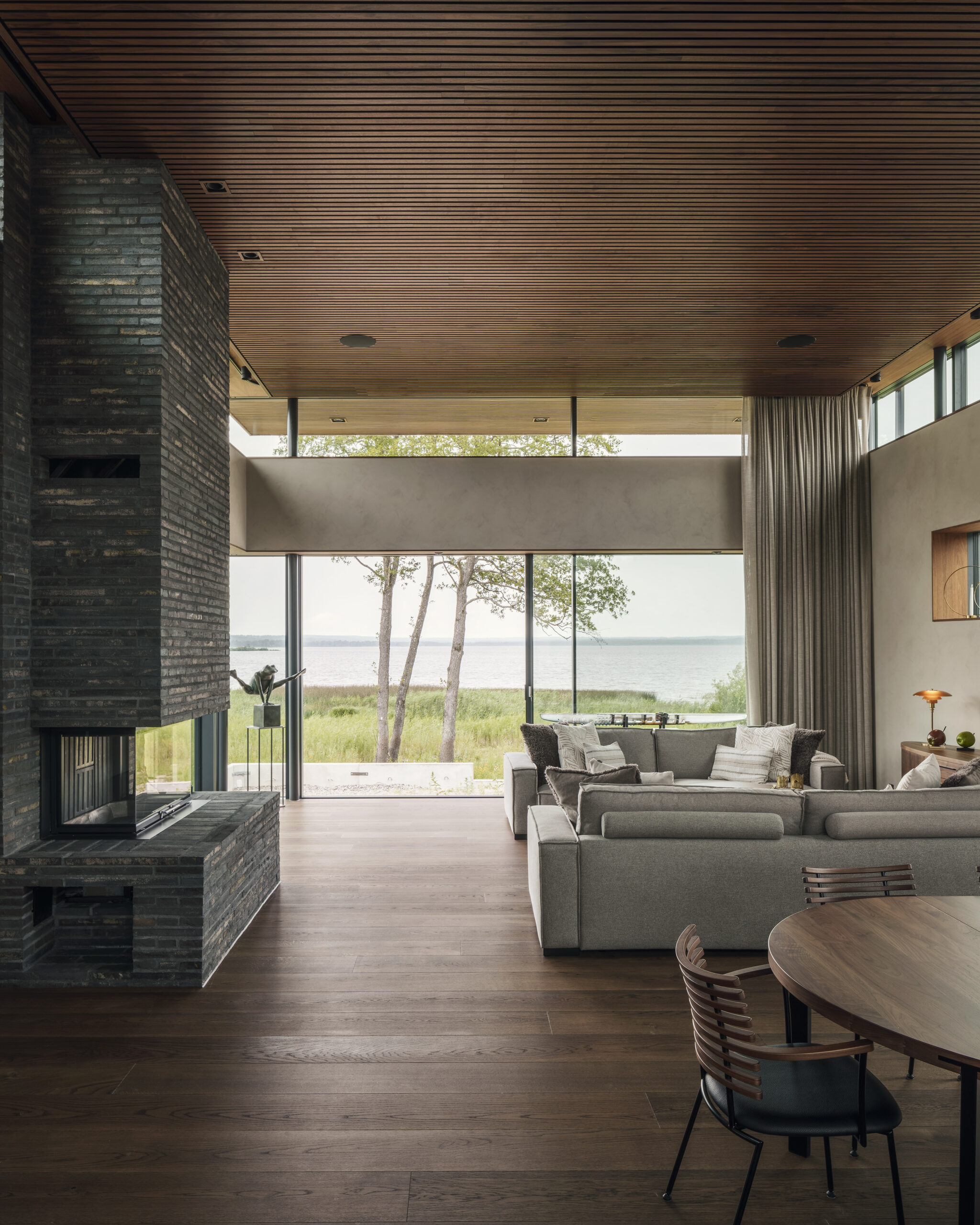
Plank floor bonded to the subfloor
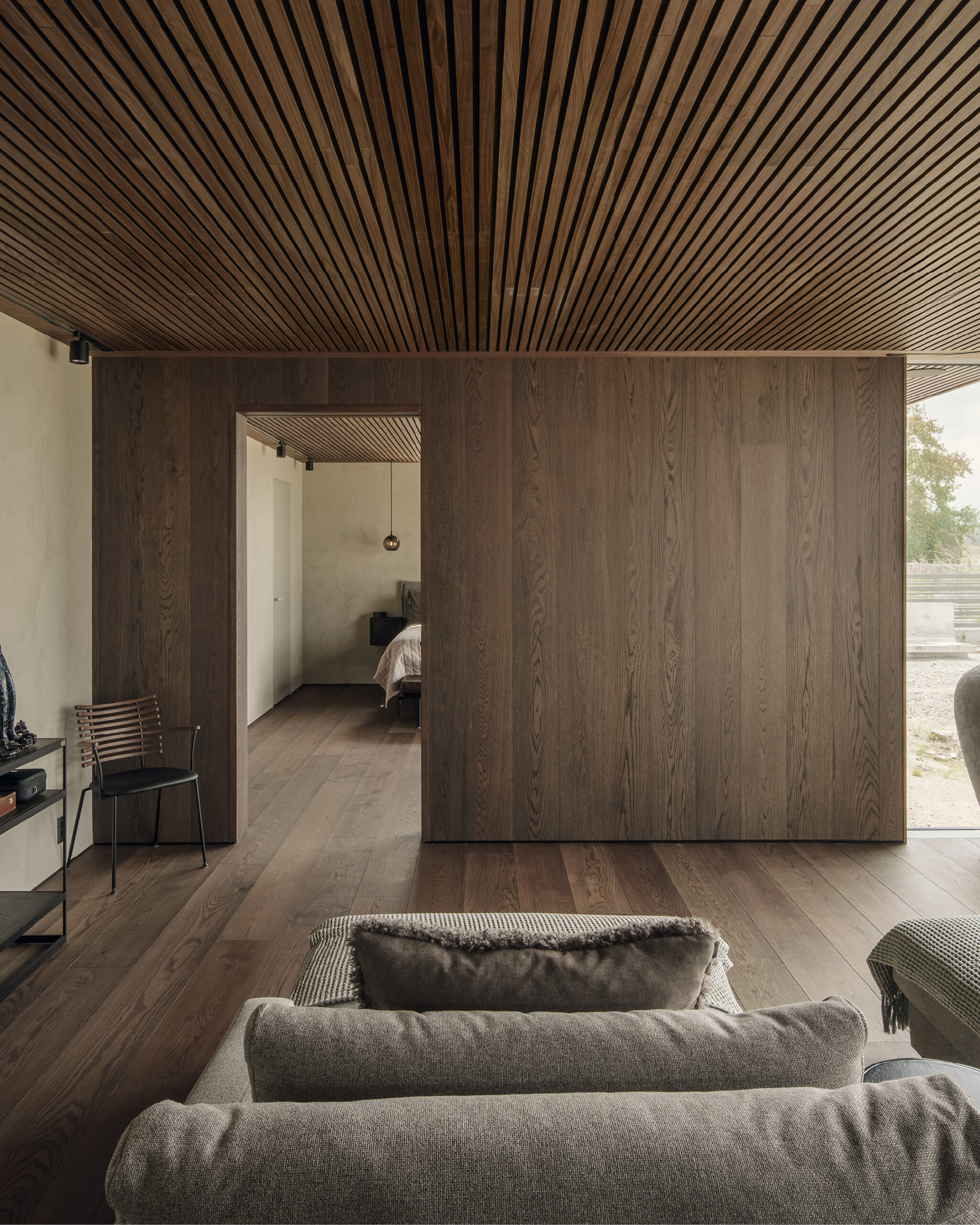
Plank flooring in random lengths
FAQ
Why are your plank floors glued or screwed down rather than installed as floating floors?
A fixed floor becomes part of the building’s structure rather than a loose layer laid on top of it. This creates a firm, quiet and solid feel underfoot, without the movement or hollow sound associated with floating floors.
Can a glued or screwed-down plank floor be installed without thresholds between rooms?
Yes. Fixed installation allows the floor to run continuously through multiple rooms, without thresholds interrupting the line—an effect that is often difficult to achieve with a floating floor.
What does “random lengths” mean in plank flooring?
It means that the lengths of the planks vary naturally rather than coming in a limited number of fixed sizes, allowing the joints to fall irregularly across the floor instead of forming a repetitive pattern.
Why do some plank floors feel repetitive or industrial?
Floors produced in just a few fixed lengths create, across a larger surface, a pattern of joints that repeats at regular intervals—a grid the eye gradually begins to notice, even when the material itself is wood.
What is the advantage of random lengths compared with fixed plank lengths?
Random lengths prevent the eye from settling on a predictable pattern, allowing it instead to follow the grain of the wood and the proportions of the room—creating a floor that feels as though it was laid specifically for that space.