

Guide: How wooden floors transform spaces
The wooden floor isn’t yet, always the first priority in a renovation or new build, often coming into focus late in the process. Yet in a space where it’s been carefully chosen, the difference is immediate. The room feels more grounded, more assured—carrying a quiet confidence that’s easy to sense but hard to define. The soft sound of footsteps, the warmth underfoot, the way the surface catches the light—all of it works subtly in the background, shaping how the space feels and how we move within it.
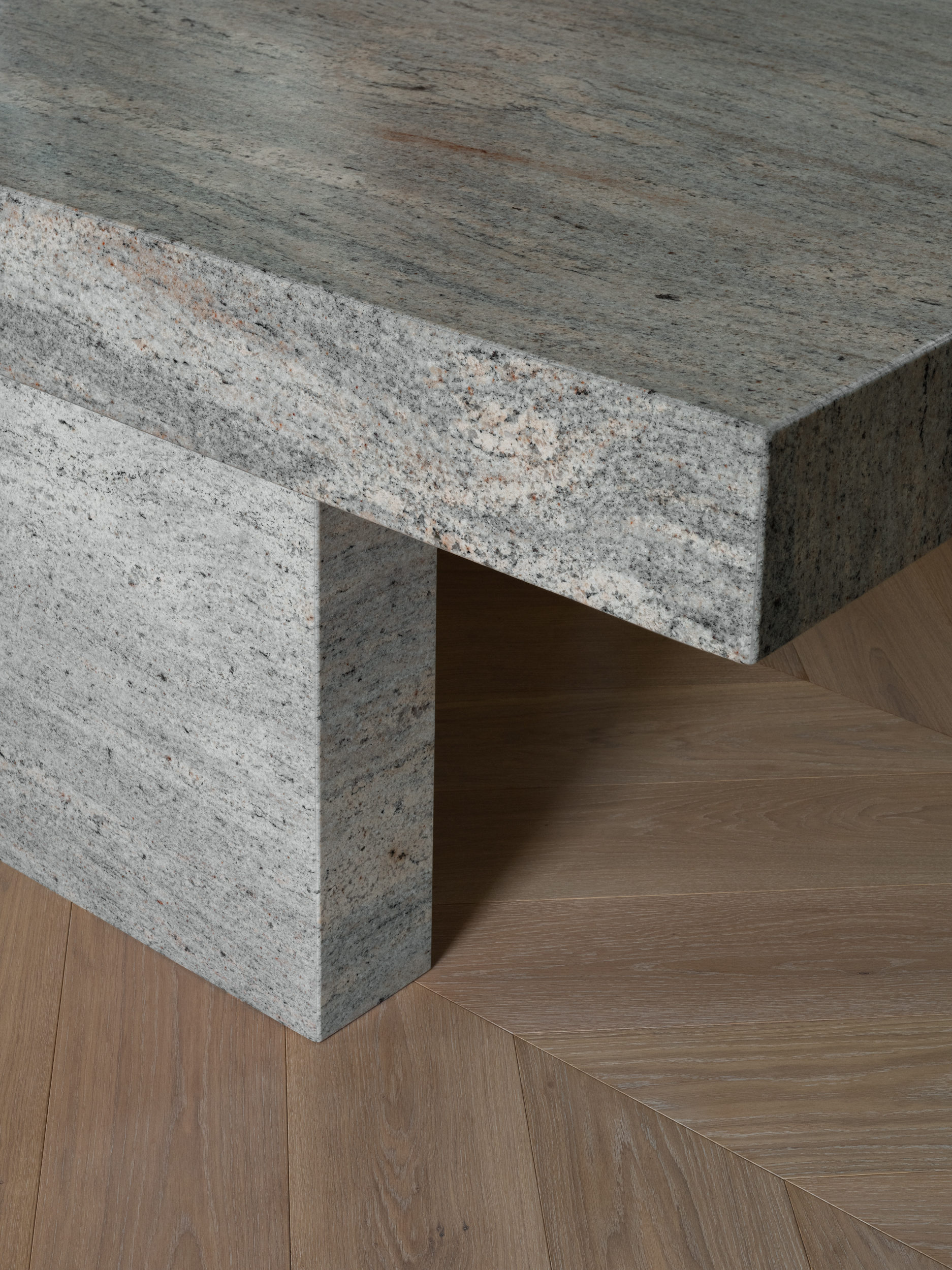
Chevron floors in contrast with natural stone
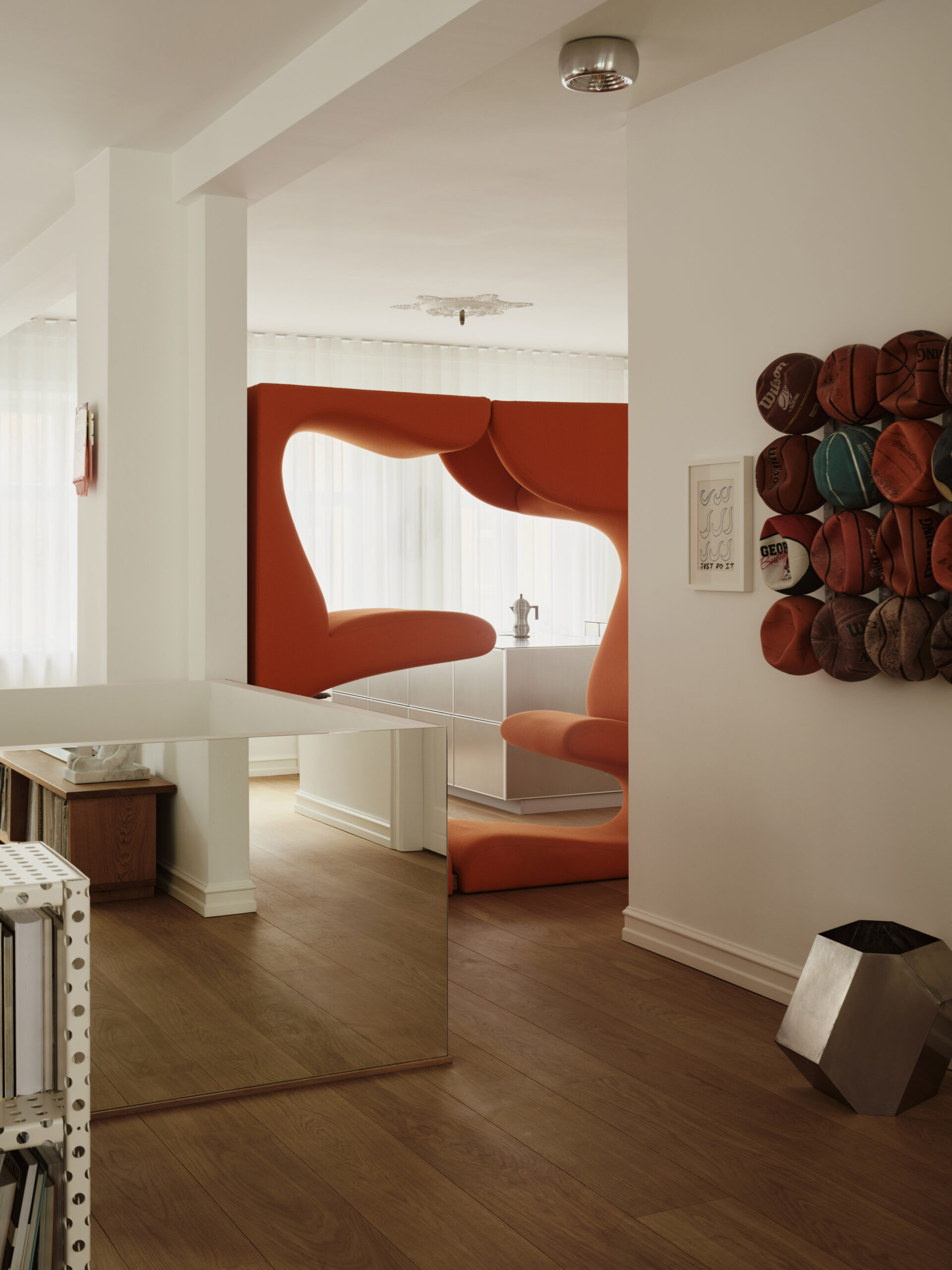
Plank floors tying together living room and kitchen
Its real influence lies in how it shapes the overall feel of a space. In Nordic homes, where light changes dramatically throughout the year, the floor acts as a constant. Pale woods help lift and reflect daylight during the darker months, opening up the room and making it feel more expansive. Richer tones, on the other hand, introduce depth and contrast, creating a more intimate and settled environment when the light is strong.
Texture plays its part as well. A brushed, matte surface softens reflections and brings out the natural character of the wood, while a smoother finish catches the light more clearly, giving the room a cleaner, more defined expression. Grain patterns, knots, and subtle variations in tone add a sense of movement and life that gently shapes the way the entire space is experienced.
Wood flooring, then, is not just a practical choice. It becomes part of the room’s identity—something that influences how light moves, how the space feels, and how we live within it. When it’s chosen well, it doesn’t stand out. It simply makes everything else feel right.
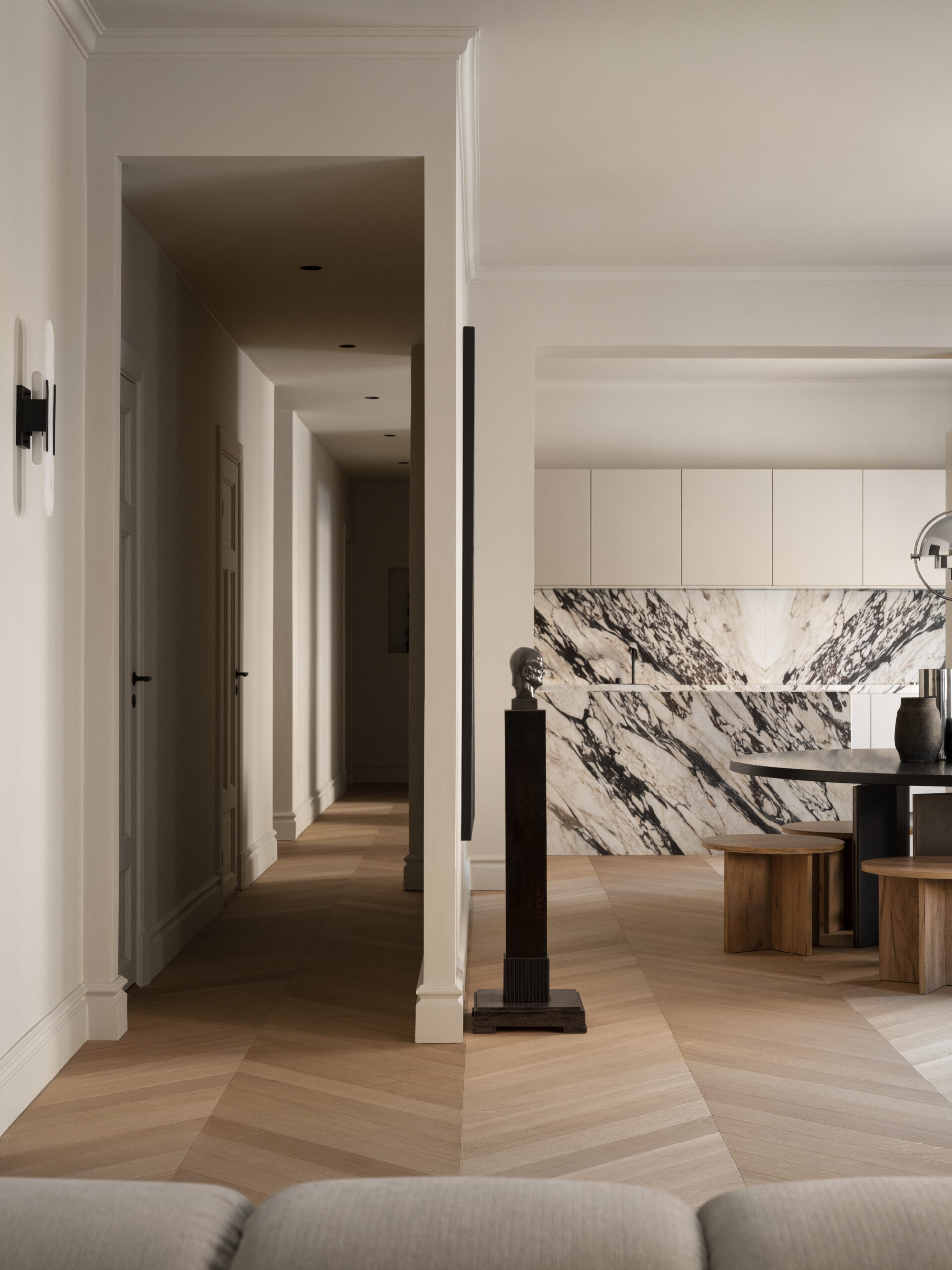
Chevron floors, 102 Sandhammaren
Flooring plays a subtle role in how a room carries sound. In pared-back interiors—where surfaces are open and details are minimal—noise can linger and feel slightly sharp. Wood helps to soften that effect. Its natural structure, combined with the way it’s laid and finished, gently absorbs and diffuses sound. It’s not always immediately obvious, but over time it makes a space feel more settled and comfortable.
It also shapes the overall mood in a quieter way. Wood introduces variation and warmth through its natural patterns and tones, bringing depth without adding clutter. Light moves differently across its surface depending on the finish, while the grain creates a sense of flow that ties the room together. For a more defined look, smaller planks or structured patterns like herringbone can add direction and rhythm. The result is a space that feels intentional and composed, while still retaining a natural softness.
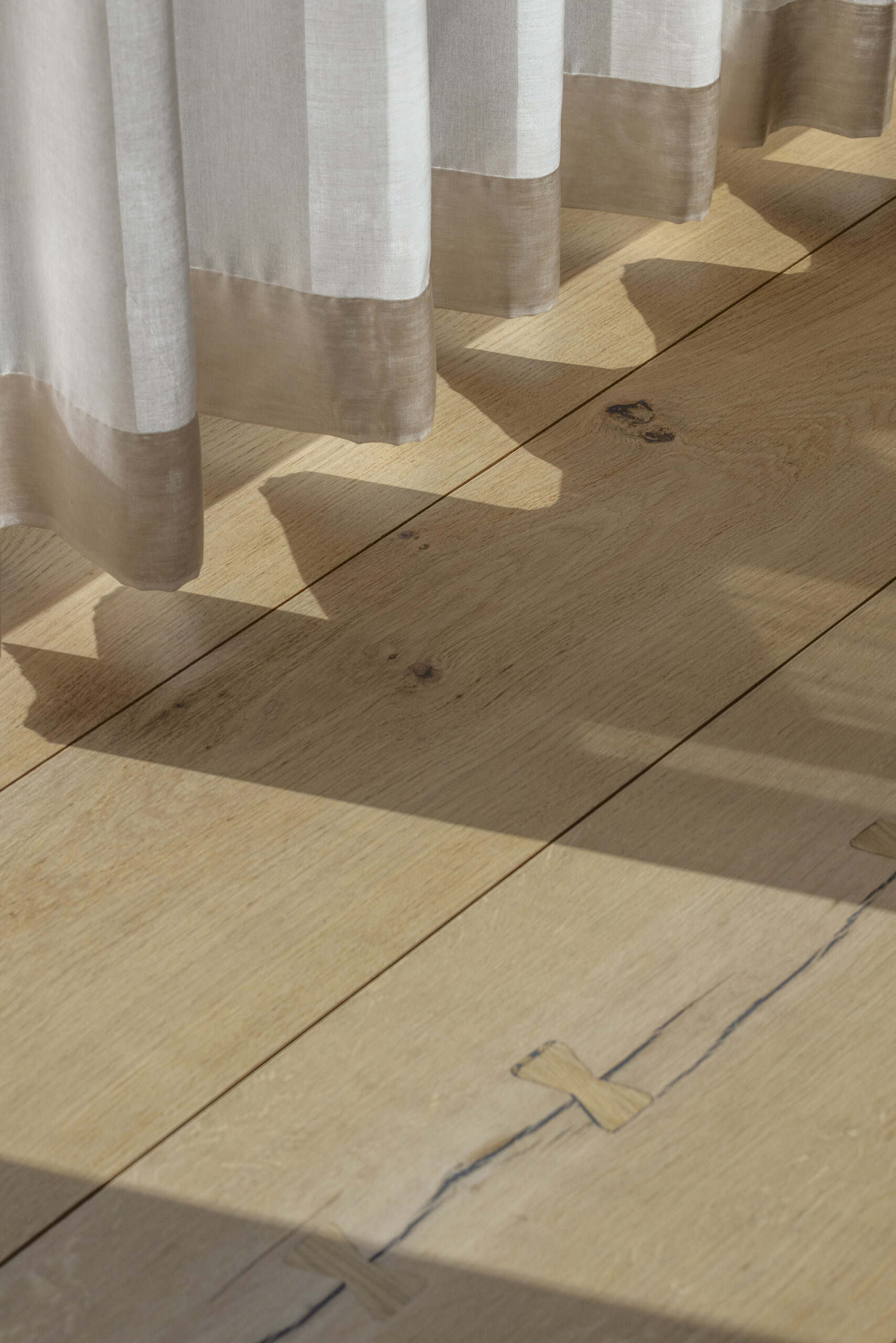
Plank floors, mixed widths with butterflies
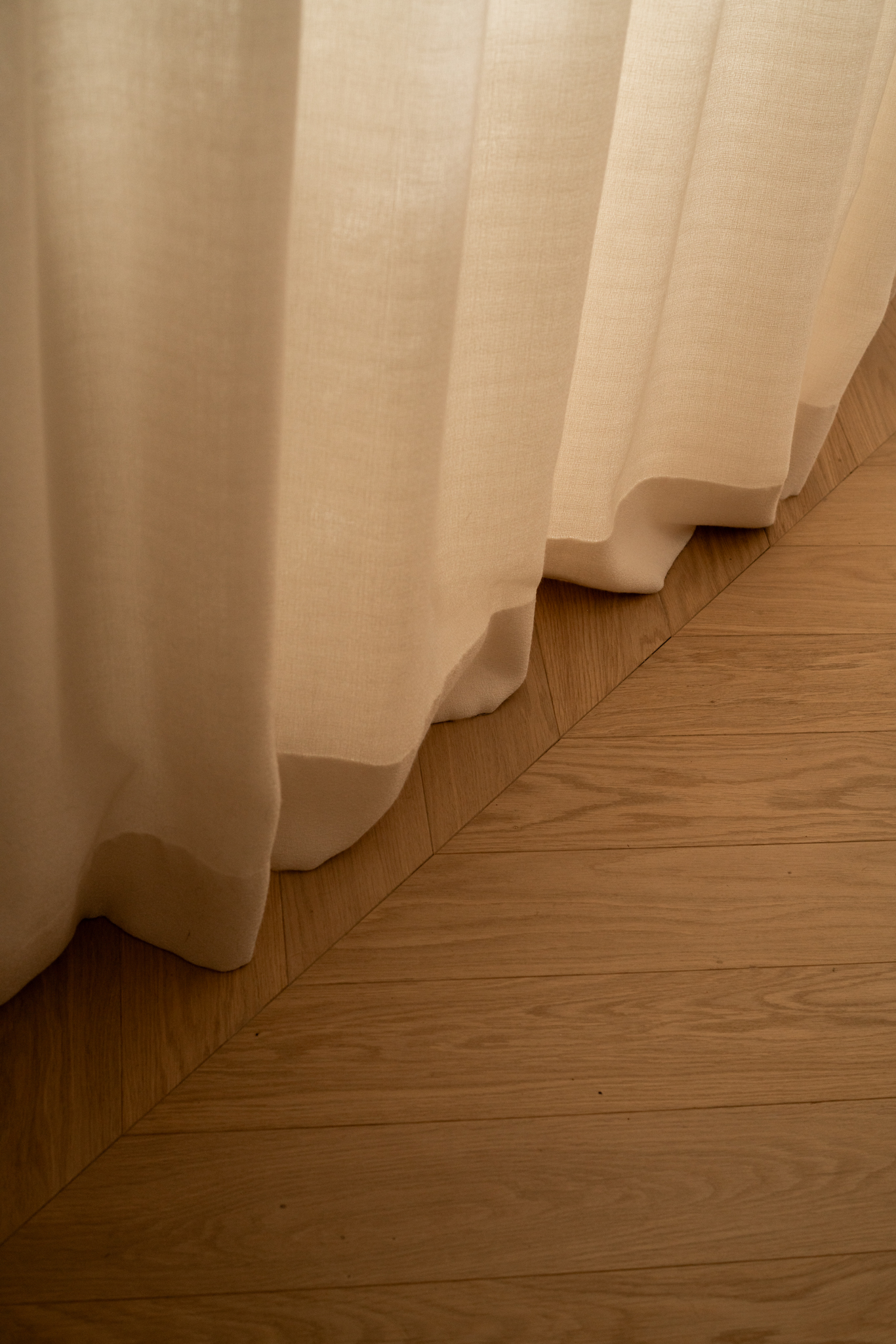
Chevron flooring creates a natural dialogue with curtains